
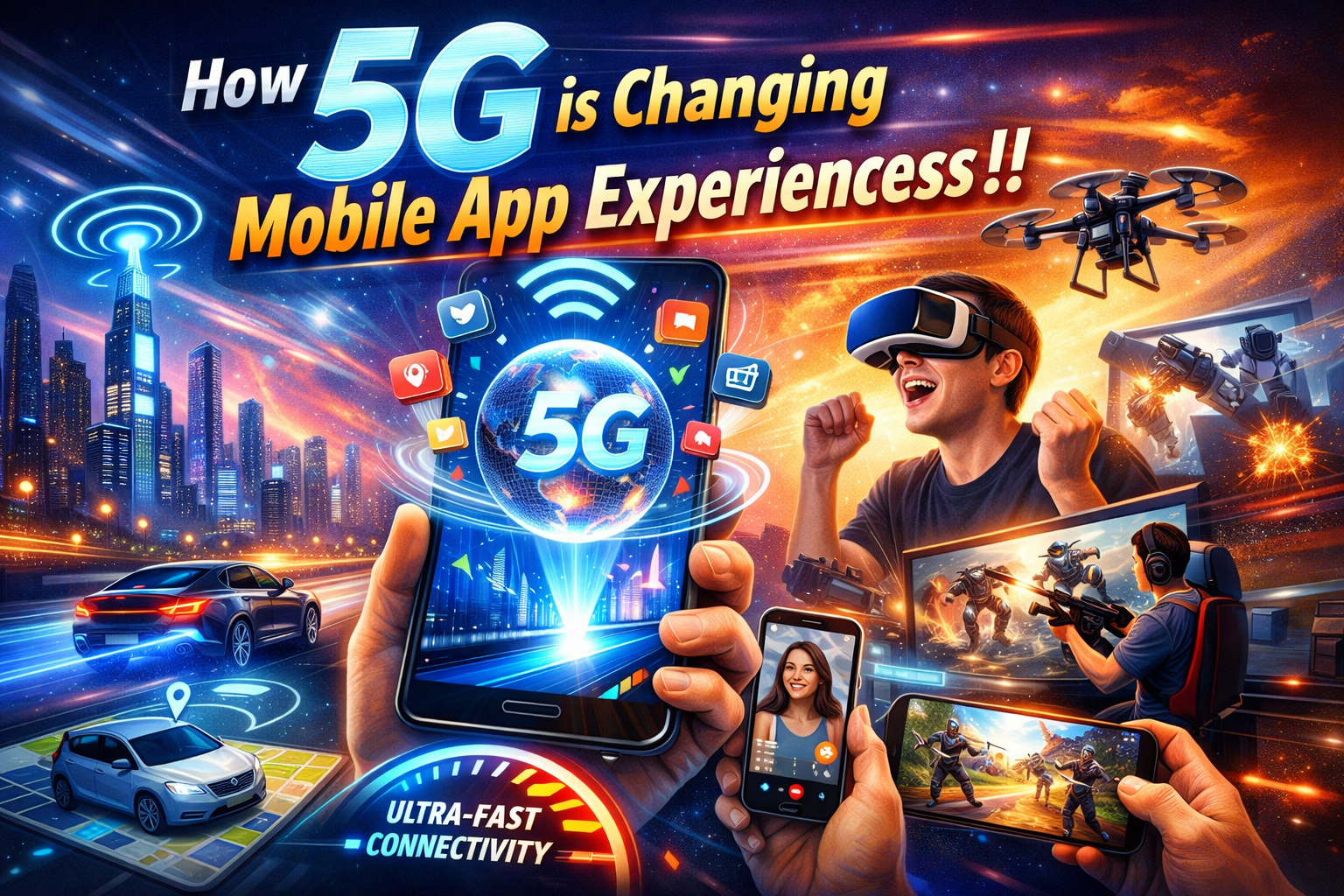
The rollout of 5G technology is transforming the mobile ecosystem faster than expected. It is not just about faster internet speed; 5G is changing how mobile apps are designed, developed, and experienced by users. From gaming and streaming to cloud-based apps and real-time services, 5G is opening new opportunities that were not possible with previous network generations.
In this article, we will explore how 5G is changing mobile app experiences, why it matters for developers and users, and how it is shaping the future of mobile applications.
What Makes 5G Different from 4G
5G is the fifth generation of mobile network technology. Compared to 4G, it offers:
- Extremely high data speeds
- Ultra-low latency
- Better network reliability
- Ability to connect more devices at once
These improvements directly impact how mobile apps perform and how users interact with them.
Faster App Loading and Smooth Performance
One of the most visible changes with 5G is speed. Apps that once took several seconds to load now open almost instantly.
With 5G:
- App launch time is reduced
- Heavy images and videos load faster
- Updates download in seconds
This improves overall user satisfaction and reduces app abandonment.
Real-Time App Experiences Without Lag
Latency is one of the biggest limitations of older networks. 5G drastically reduces latency, which makes real-time interactions smoother.
This benefits apps such as:
- Online multiplayer games
- Live video streaming apps
- Video calling and conferencing apps
- Real-time chat and collaboration tools
Users experience fewer delays and smoother interactions.
Growth of Cloud-Based Mobile Apps
5G makes cloud computing more powerful for mobile apps.
Benefits include:
- Less processing load on the device
- Faster communication with cloud servers
- Better performance even on low-end phones
Apps can now rely more on cloud processing instead of local hardware.
Better AR and VR App Experiences
Augmented Reality (AR) and Virtual Reality (VR) apps require high speed and low latency. 5G provides both.
With 5G:
- AR navigation becomes more accurate
- VR gaming feels smoother
- Shopping apps can show realistic previews
This is especially useful for gaming, education, healthcare, and e-commerce apps.
Impact of 5G on Mobile Gaming
Mobile gaming is one of the biggest beneficiaries of 5G.
Key improvements include:
- No lag in online multiplayer games
- Faster matchmaking
- High-quality graphics streaming
Cloud gaming platforms become more practical with 5G, even without powerful devices.
Smarter IoT and Connected Apps
5G supports a large number of connected devices at the same time.
This helps apps related to:
- Smart homes
- Wearable devices
- Health monitoring systems
- Smart city solutions
Apps can now handle real-time data from multiple devices efficiently.
Better User Engagement and Retention
All these improvements lead to a better overall app experience.
As a result:
- Users spend more time in apps
- Engagement rates increase
- App retention improves
When apps are fast and responsive, users trust them more.
What This Means for App Developers
For developers, 5G creates new possibilities:
- Build feature-rich apps
- Focus on real-time functionality
- Create immersive experiences
- Reduce dependency on device hardware
Developers who adapt early can stay ahead in the competitive app market.
Challenges Developers Should Consider
Despite its advantages, 5G also brings challenges:
- Limited availability in some regions
- Need to support both 4G and 5G users
- Higher data usage concerns
Apps should be optimized to perform well across different network conditions.
Trusted Resource to Learn More About 5G
To understand how 5G works and its impact on mobile applications, you can refer to this official and trusted resource:
👉 https://www.qualcomm.com/5g/what-is-5g
This page explains 5G technology, use cases, and real-world applications in detail and is widely used by developers and businesses.
The Future of Mobile Apps with 5G
As 5G adoption increases, mobile apps will:
- Become more cloud-driven
- Offer richer and interactive content
- Support advanced AI features
- Deliver near-instant responses
The difference between mobile and desktop experiences will continue to decrease.
Final Conclusion
5G is not just an upgrade in speed; it is a shift in how mobile apps are experienced. Faster loading, real-time interaction, immersive technologies, and smarter connectivity are becoming the new standard.
For users, it means better apps.
For developers, it means new opportunities.
Understanding and adapting to 5G early can make a big difference in the success of future mobile applications.