
App monetization is one of the biggest challenges for mobile app developers today. Building an app is already difficult, but earning money from it without ruining user experience is even harder. Many developers try banner ads or interstitial ads, but users often find them annoying and uninstall the app.
This is where rewarded ads come in.
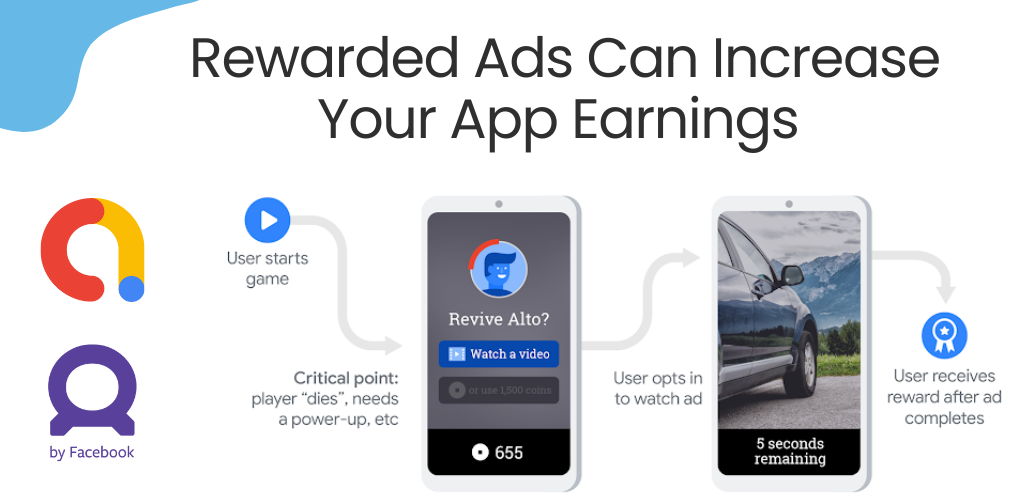
Rewarded ads have become one of the most effective ways to monetize apps while keeping users happy. Instead of forcing ads, you give users a choice — watch an ad and get a reward. This simple idea can significantly increase app earnings if implemented correctly.
In this article, we will explain how rewarded ads work, why they perform better, and how they can increase your app revenue without hurting user retention.
What Are Rewarded Ads?
Rewarded ads are a type of ad format where users voluntarily watch a video ad in exchange for a reward. The reward can be anything useful inside the app, such as:
- Extra coins or points
- Game lives or power-ups
- Premium content access
- Unlocking features
- In-app currency
Unlike forced ads, rewarded ads feel fair because users get something valuable in return. This creates a positive relationship between the app and the user.
Why Rewarded Ads Work Better Than Other Ad Formats
Traditional ad formats like banners and interstitials interrupt the user experience. Users don’t like interruptions, especially during gameplay or important actions.
Rewarded ads solve this problem because:
- Users choose to watch the ad
- Ads appear at the right moment
- Rewards motivate engagement
- Completion rate is very high
Because users willingly watch these ads till the end, advertisers pay more for rewarded ads compared to normal ads. This directly increases your earnings.
How Rewarded Ads Increase App Earnings
Rewarded ads improve monetization in multiple ways. Let’s understand how.
1. Higher eCPM Compared to Other Ads
Rewarded video ads usually have a much higher eCPM (effective cost per mille). Since advertisers know users will watch the full ad, they are willing to pay more.
This means:
- More money per ad view
- Better fill rates
- Stable long-term revenue
Even with fewer ads, you can earn more.
2. Better User Retention
One of the biggest advantages of rewarded ads is improved user retention. Users stay longer in the app because rewards help them progress faster.
For example:
- Players continue playing games
- Users unlock premium features
- Engagement time increases
More time in the app means more chances to show ads, which increases lifetime value (LTV).
3. Non-Intrusive Monetization
Rewarded ads don’t interrupt users unexpectedly. They appear when users actually need something.
Common placements include:
- After losing a game level
- Before unlocking premium content
- When user runs out of coins
This makes monetization feel natural, not forced.
4. Increased Ad Completion Rate
Rewarded ads have very high completion rates because users want the reward. Higher completion rates mean:
- Better advertiser trust
- Higher payouts
- Improved ad network performance
This also helps your app get better quality ads over time.
Best Places to Use Rewarded Ads in an App
Placement is very important. Poor placement can reduce effectiveness.
Best moments to show rewarded ads:
- When user fails a level
- When resources are finished
- Before premium content access
- During voluntary bonus actions
Avoid forcing rewarded ads. Always keep it optional.
Rewarded Ads vs In-App Purchases
Many developers think only in-app purchases can generate serious revenue. But rewarded ads can actually support or even improve in-app purchases.
Here’s how:
- Users try rewards first
- They understand value
- Later they may pay real money
Rewarded ads work especially well for free users who never spend money. You still earn from them without pushing purchases.
Common Mistakes Developers Make
Some developers fail with rewarded ads because of bad implementation.
Avoid these mistakes:
- Showing ads too frequently
- Giving very small rewards
- Forcing users to watch ads
- Poor ad timing
Balance is key. Reward should feel worth the ad time.
Tools & Platforms for Rewarded Ads
To implement rewarded ads, developers usually use trusted ad networks and SDKs. These platforms provide analytics, fill rate optimization, and payout management.
If you want to learn more about rewarded ads and mobile app monetization best practices, this official guide is very helpful:
👉 https://support.google.com/admob/answer/7313578
This resource explains rewarded ads in detail and is trusted by developers worldwide.
Rewarded Ads for Different App Types
Rewarded ads are not limited to games.
They work well in:
- Gaming apps
- Quiz apps
- Learning apps
- Utility apps
- Reward-based apps
Any app where users value extra benefits can use rewarded ads effectively.
Long-Term Benefits of Rewarded Ads
Rewarded ads don’t just increase short-term earnings. They improve long-term growth.
Benefits include:
- Higher lifetime value
- Better user satisfaction
- Stable ad revenue
- Reduced uninstall rate
When users feel rewarded, they trust the app more.
Final Conclusion
Rewarded ads are one of the smartest app monetization strategies today. They respect user choice, improve engagement, and increase revenue without harming user experience.
If you are struggling with low earnings or high uninstall rates, rewarded ads can be a game changer. Start with one placement, test performance, and optimize slowly.
Monetization should feel like a feature, not a punishment.